

Budget Indian Wedding

Indian Weddings
The actual costs of an Indian wedding
Most Indian weddings involve hundreds of guests. The number of guests attending your wedding is going to be the deciding factor in terms of how much your wedding will cost. A lower guest count will result in less expensive costs than a higher guest count. As well as the number of guests you intend to invite, you will also need to decide what type of wedding you want to have.
Will you have a small and intimate ceremony or a large and lavish affair? You will also need to establish a budget. How much money would you like to spend on your wedding? Once you have established these decisions, you can begin to make arrangements for your wedding. This article will provide you with guidance in arranging your wedding while remaining within your established budget.
An Indian Wedding includes pre-wedding ceremonies, the actual ceremony of marriage, and post-wedding ceremonies. Ceremonies occurring prior to the wedding day are known as pre-wedding ceremonies.
Some of the most common pre-wedding ceremonies include Mehendi (the process of applying henna to the hands and feet of the bride-to-be), Haldi (the process of applying turmeric to the skin of the bride-to-be), Sangeet (an evening of song and dance), etc. There are typically many separate ceremonies that occur on the wedding day.
The following provides a realistic overview of the major costs associated with an Indian Wedding and how to develop a realistic wedding budget.
Determining the cost of an Indian wedding: In order to establish the overall cost of your wedding, you must first identify all of the elements contributing to your total wedding budget. Guest Count The number of guests you choose to invite to your wedding is often the primary element determining the overall cost of an Indian Wedding. The larger the number of guests you invite, the greater the amount of funds you will need to allocate for necessities such as food, tables/chairs/seating, lodging/accommodations, travel/transportation, invitations, hospitality services/guest services and possibly even a larger venue.
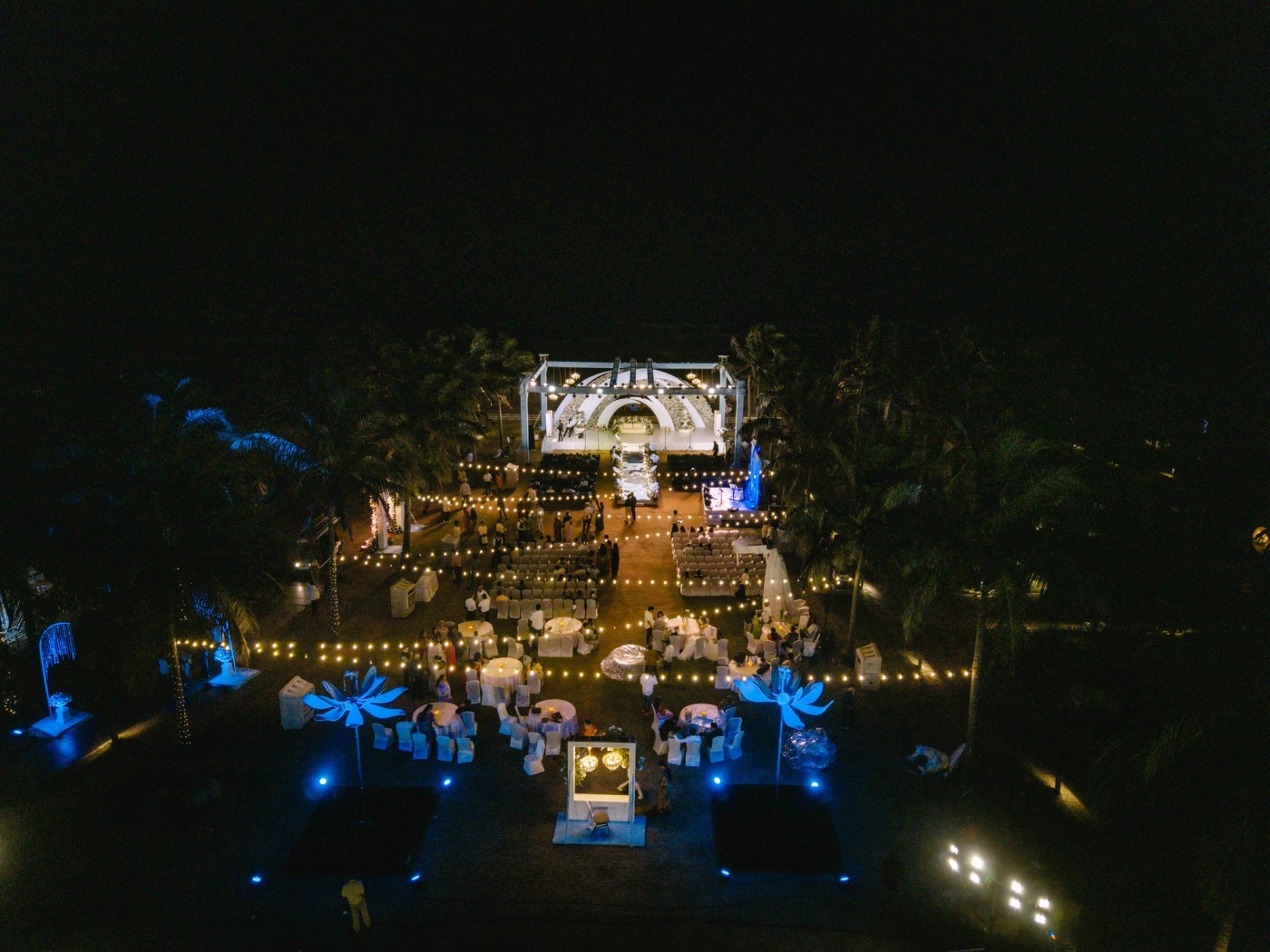
For example, planning for a 150-guest celebration versus a 700-guest wedding are entirely different planning processes. Number of Functions A wedding with only a ceremony and reception will have a much smaller budget than a wedding that includes Mehendi, Haldi, Sangeet, Wedding, Reception and multiple welcome events. Each additional function may require its own decorations, food, entertainment, photography, makeup and logistical support. Destination A destination wedding introduces additional costs such as accommodation, transportation, guest hospitality, venue logistics and production movement.
However, destination weddings can also consolidate several functions at one location, thereby providing a more unified guest experience. Venue The venue for your wedding can affect many aspects of your budget beyond just the rental fee. When comparing venues, you should consider catering policies, available accommodations, décor limitations, electrical and production needs, event times, furniture availability, parking and guest flow before comparing venue prices.
1. Venue: The First Major Decision Made Regarding Your Wedding The first major decision made regarding your wedding is selecting your venue. Based upon the type of wedding you select, venue expenses may include:
- Rental fees for your venue
- Charges for using a banquet hall or lawn area
- Accommodations for guests
- Commitments regarding food and beverage
- Service fees charged by the venue
- Expenses related to additional event areas used by guests
- Needs for power and technical equipment
- Rental fees for furniture and venue amenities
For destination weddings, accommodation expenses may be a significant portion of your total wedding investment.
Therefore, couples should evaluate venues based upon the entire wedding experience provided rather than focusing solely on the rental price charged by each venue.
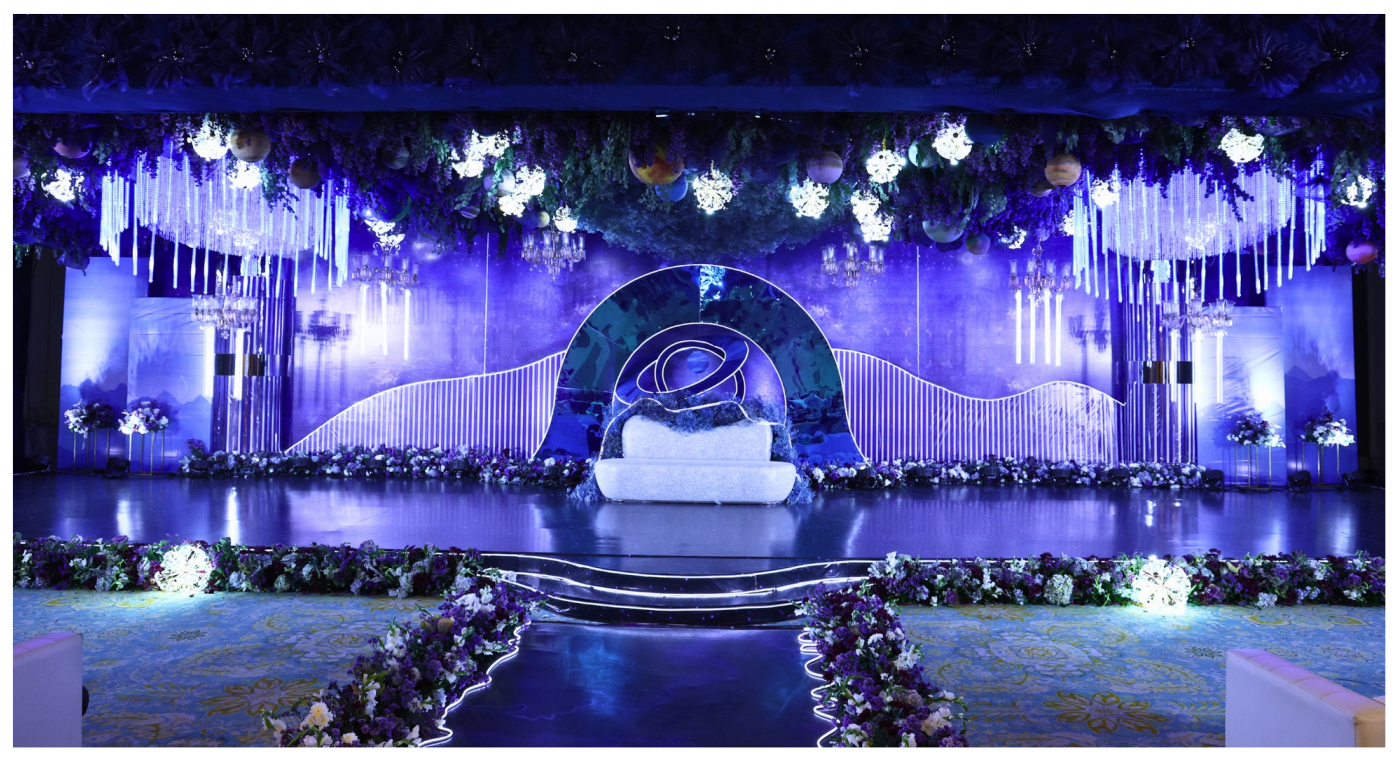
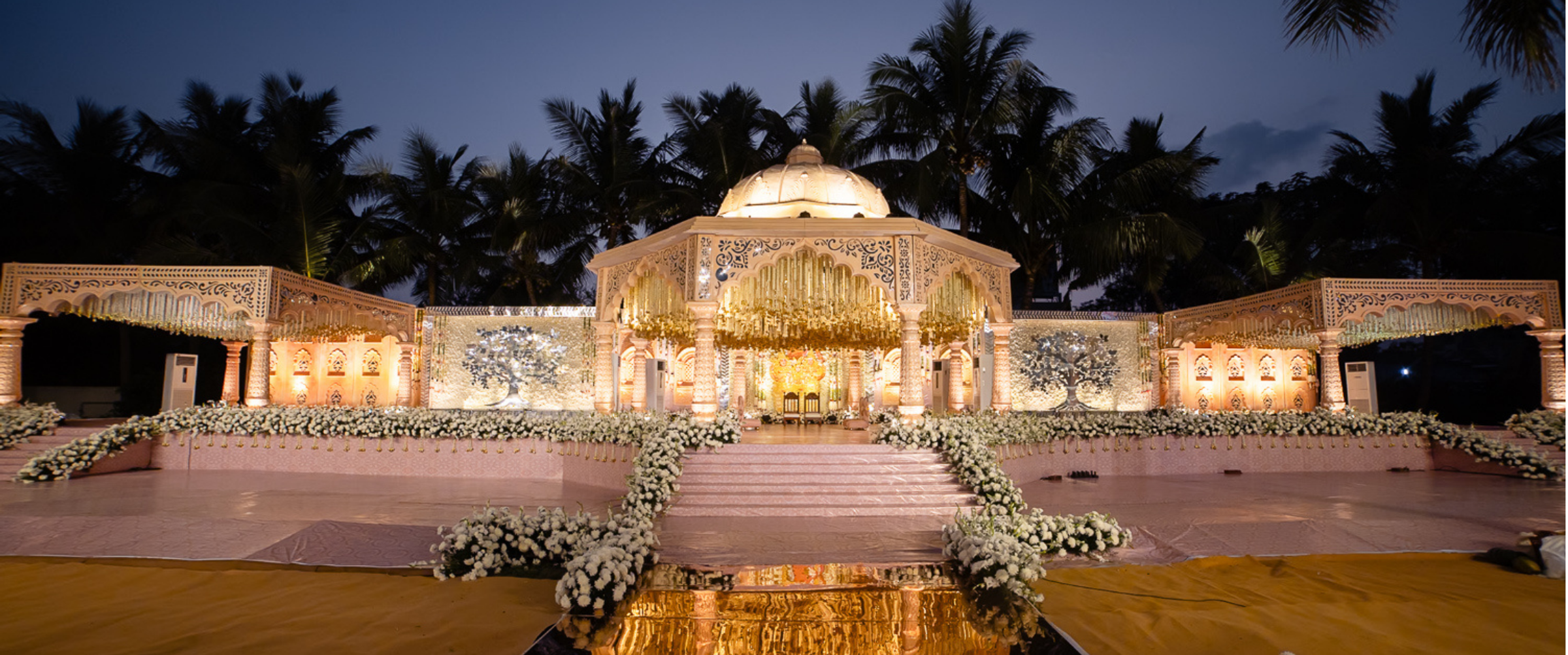
2. Decor and Wedding Design: Decor can vary greatly in terms of complexity from simple flower arrangements to large-scale custom installations. Decor costs may include:
- Designs for your stage area
- Installations at your entrance
- Flower arrangements
- Mandaps (ceremonial structures)
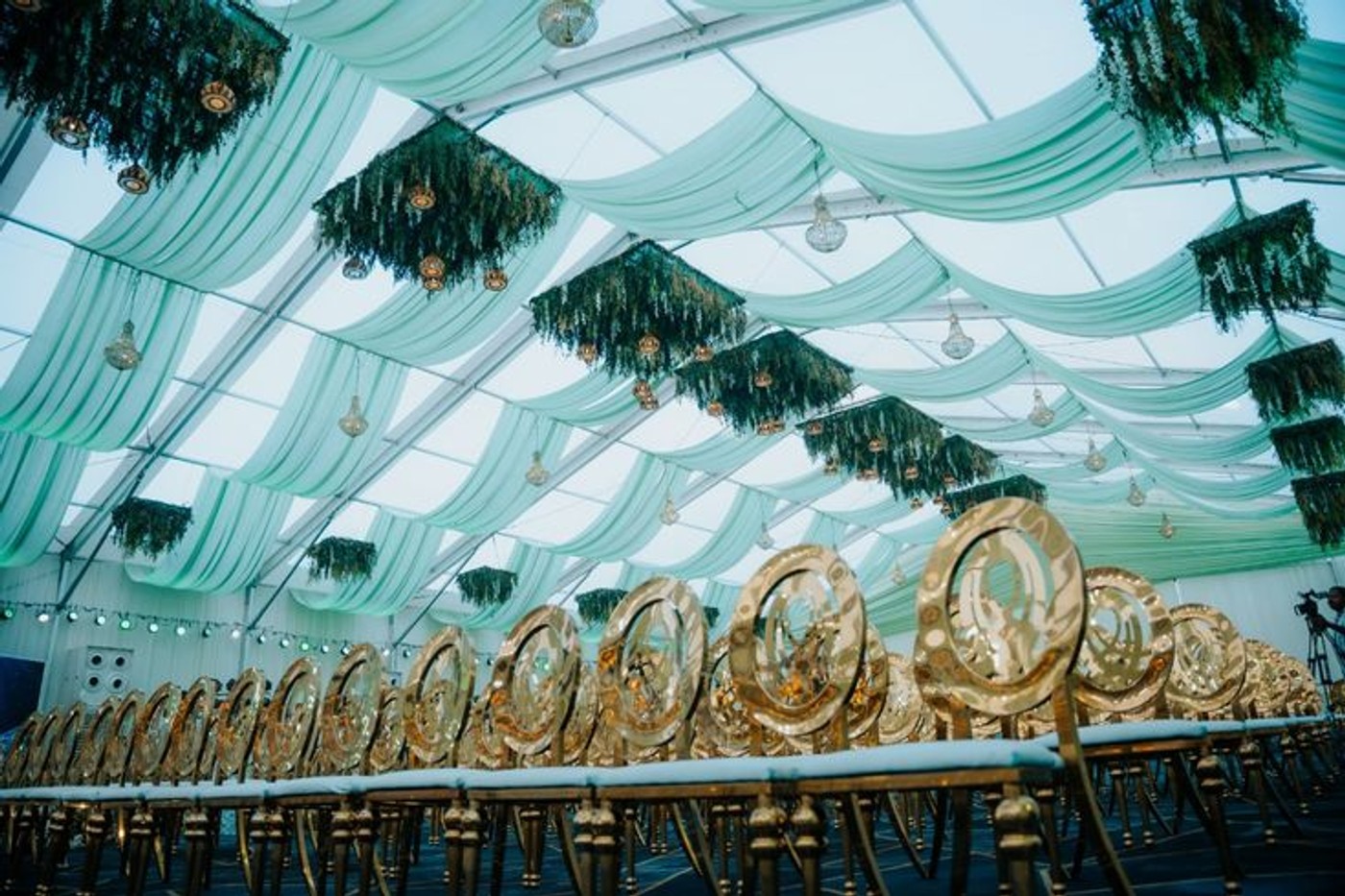
- Seating arrangements
- Lighting systems
- Table styling
- Backdrops
- Custom structures
A professional wedding design team can then allocate décor funds across the elements that will have the greatest visual impact and provide the best guest experience.

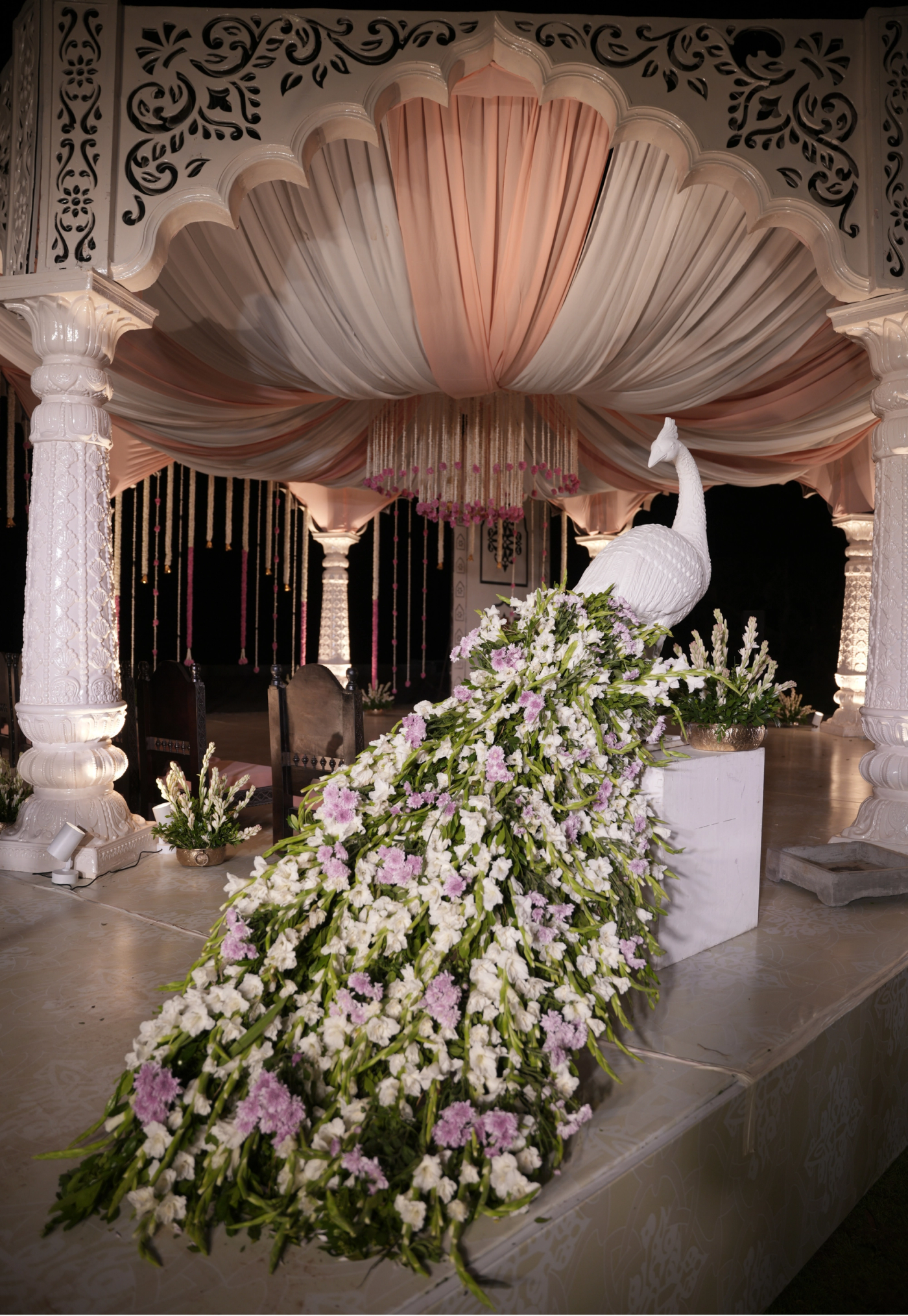
3. Food and Catering: Food is one of the most prominent features at an Indian wedding. Your catering budget will depend on:
- Number of guests invited
- Number of functions held
- Type of cuisine offered
- Length of menu items offered
- Live counters offered to guests
- Dessert options offered to guests
- Types of beverages offered to guests
- Style of service offered to guests (e.g., buffet vs. plated)
- Special dietary needs requested by guests
- Quality of ingredients used in preparing food items offered to guests
- Late night meals offered to guests or additional meals offered to guests

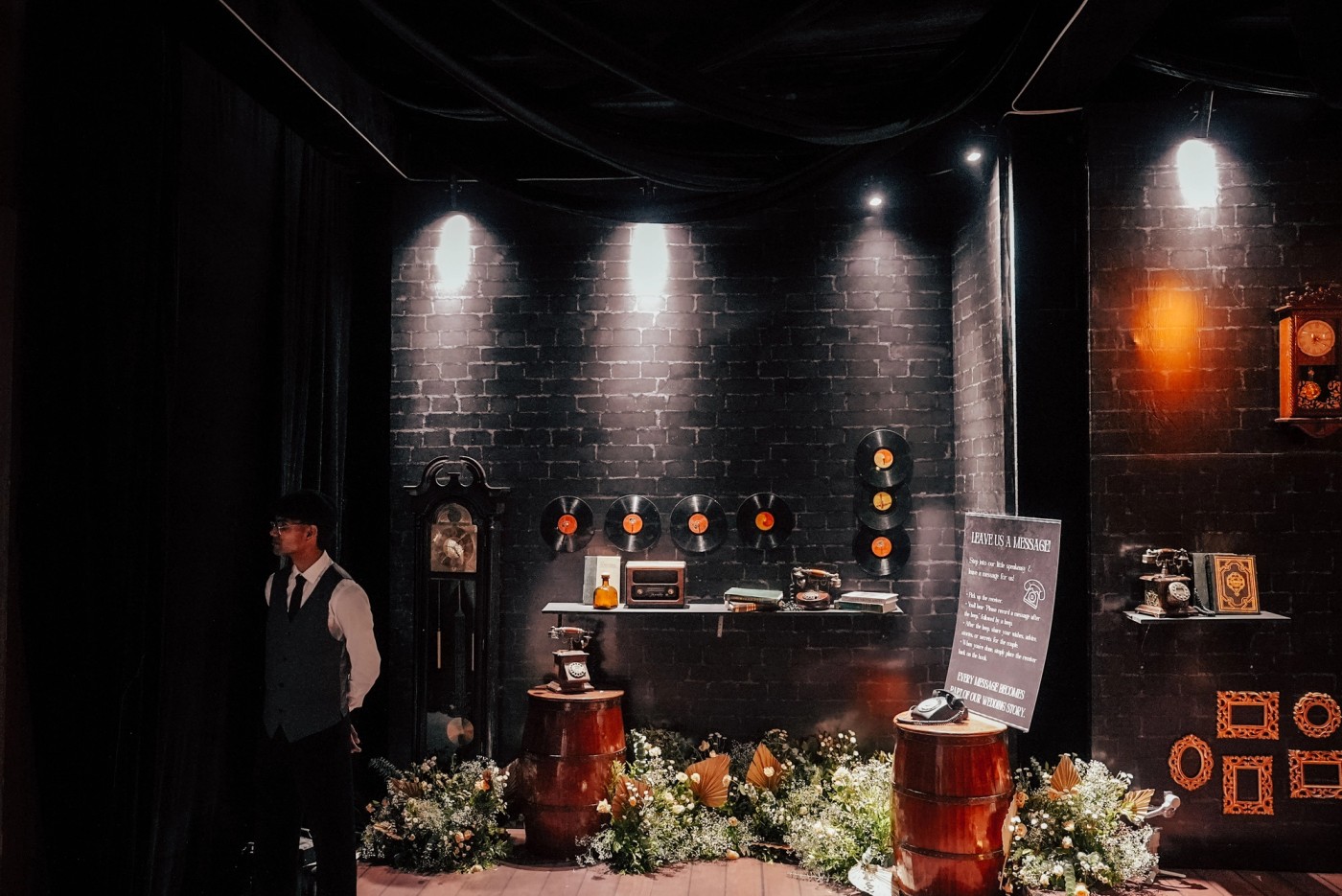
A large menu is not necessarily a better menu. Instead, you should determine who your guests are and create menus that appear thoughtful and appropriate for your celebration. If you are having a destination wedding, catering services must also be coordinated with your venue and movement of guests throughout your wedding weekend.
4. Photography and Videography: Photography is an investment in memories that will last longer than your event does. Photography costs will depend on:
- Number of functions held
- Number of photographers hired by you
- Candid photography services hired by you
- Traditional photography services hired by you
- Cinematography services hired by you
- Drone photography services hired by you
- Pre-wedding photo sessions hired by you
- Albums produced by your photographers
- Same day edit services hired by you
- Delivery methods provided by your photographers
Do not evaluate photographers based solely upon their package prices. Evaluate them based upon their portfolios, styles of shooting photos, sizes of their teams, deliverable formats provided by them and experience with weddings similar to yours. A photographer who understands your timeline and design preferences can also work more efficiently with your planner and décor team.
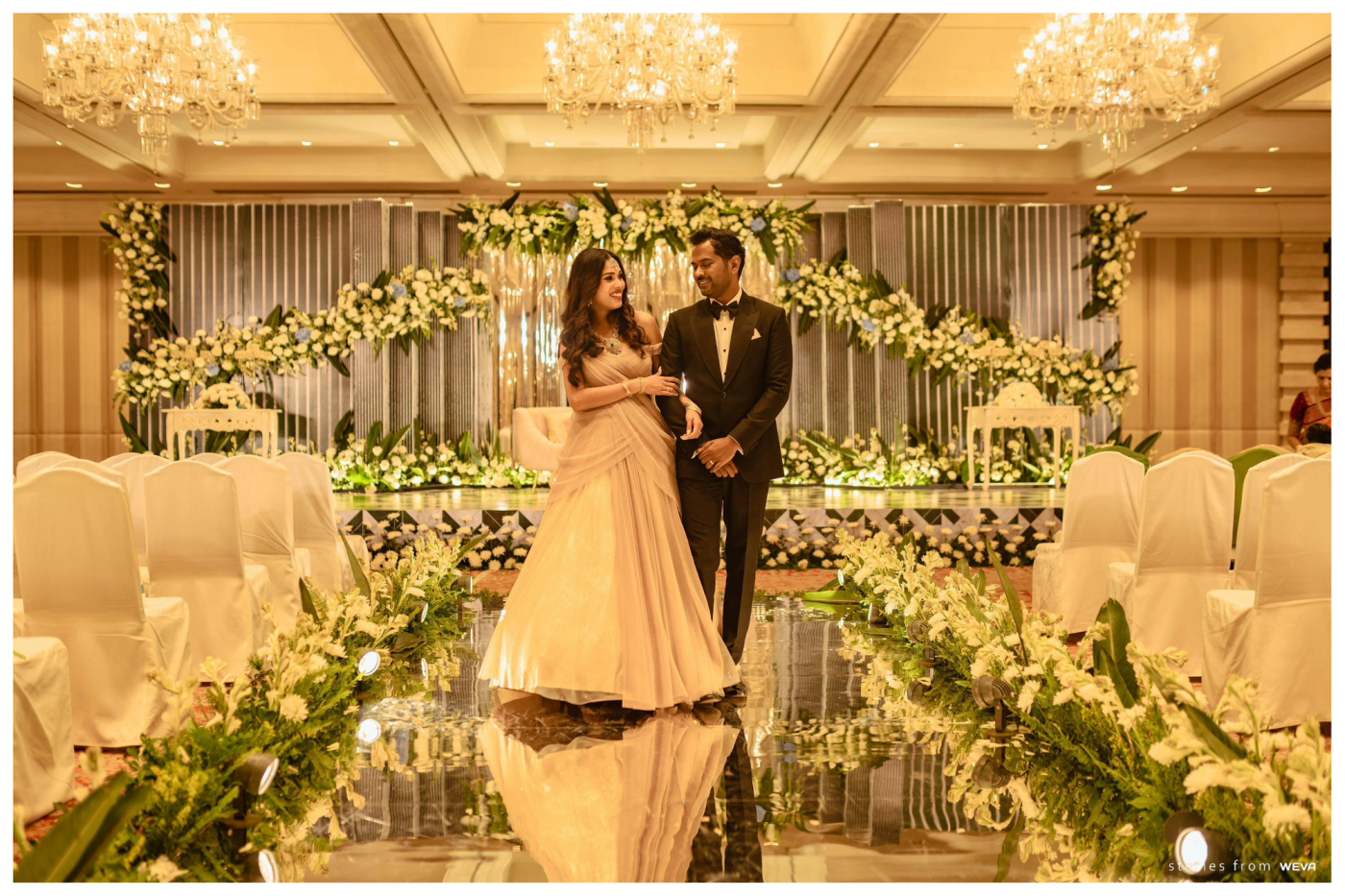
5. Makeup/Hair/Beauty Services: Bridal beauty budgets may include makeup/hair/beauty services for multiple functions. Bridal beauty services may also be required for:
- Your bride
- Your groom
- Your mother(s)
- Your sister(s)
- Your bridesmaids & Close relatives
If you plan to host multiple functions during your wedding celebration, calculate your total beauty requirements rather than hiring beauty professionals separately for each event. Trials, travel expenses for beauty professionals, additional artists hired by beauty professionals for larger groups of people needing services and early morning schedules may also impact your total beauty services costs.
6. Bridal Attire & Accessories: An Indian bride’s wardrobe can quickly accumulate significant expenses. You should allocate funds for: - Your bridal lehenga/saree - Your groom’s sherwani - Outfits worn at your reception - Outfits worn at Mehendi/Haldi functions - Outfits worn at Sangeet functions - Jewelry worn at various functions - Footwear worn at various functions - Accessories worn at various functions - Alterations required for your outfits - Customization required for your outfits The key is to create your wardrobe plan early. Your outfits may also influence your wedding décor/color palettes for major photo opportunities.
7. Entertainment : Entertainment options available to you range from a DJ/Emcee performing music/entertainment to live bands/singers/dancers/celebrity artists/couple entry performances/fireworks/etc.
Entertainment services must be considered in conjunction with your event design due to technical requirements/stage layouts needing coordination prior to your event.
8. Hospitality/Guest Management Hospitality/Guest Management services become extremely important for destination weddings. Hospitality services may include:
- Management of RSVPs received from guests
- Booking hotels/accommodations for guests
- Creation of rooming lists for guests
- Arrangement of airport transportation for guests
- Arrangement of local transportation for guests
- Welcome experiences provided to guests upon arrival at their hotels/accommodations
- Hamper/welcome baskets provided to guests upon arrival at their hotels/accommodations
- Luggage tags provided to guests upon arrival at their hotels/accommodations
- Communication with guests regarding event details/schedule/location etc. prior to their arrival at their hotels/accommodations
- Support provided to guests upon check-in at their hotels/accommodations
- Movement of guests between various locations during your wedding celebration
Hospitality services are frequently underestimated because they occur behind-the-scenes; however, these services can make a tremendous difference between guests merely attending your wedding vs. truly experiencing your wedding celebration.
9. Logistics/Production Services: Large weddings require significant behind-the-scenes logistical support services. You should consider - Transportation services for vendors working at your wedding celebration, movement services for decor items used at your wedding celebration, fabrication services for custom décor items used at your wedding celebration, setup/dismantling services for décor items used at your wedding celebration, equipment rental services for production purposes used at your wedding celebration, power generation services used at your wedding celebration, backstage requirements for performers working at your wedding celebration, movement services for artists/performers working at your wedding celebration, guest transportation services used at your wedding celebration, event scheduling/timing services used at your wedding celebration, storage services used at your wedding celebration.
How should you divide your wedding budget: Rather than adhering to a rigid percentage-based budget formula, create a priority-based budget. Begin by identifying your priorities as follows:
- Essential: Venue, Food, Core vendors,accommodation & logistics
- Experience: Decor, Entertainment, Hospitality & Guest experiences
- Personal: Outfits, Jewelry, Stationery & Customized Elements
- Optional: Elaborate installations, Luxury upgrades, Additional entertainment & Special effects
This approach enables you to safeguard those elements that are most important to you.
For instance, if decor is your highest priority, you may opt for a less expensive entertainment package. If creating an exceptional guest experience is your highest priority, you may choose to invest more in accommodation, hospitality & transportation services.
Hidden Costs Many couples budget for obvious categories; however, they often overlook smaller expenses. Additional costs that may be included in your wedding budget depending on your specific wedding celebration may include:
- Vendor travel expenses
- Vendor accommodation expenses
- Overtime pay for vendors
- Transportation expenses for Vendors/Guests
- Additional electricity usage Expenses - Last-Minute guest additions/Extra meals for Guests
- Printing expenses for invitations/stationery/etc.
- Welcome gifts/Welcome hampers for guests
- Applicable taxes/service charges Paid by vendors/consumers
- Production changes/weather contingencies/etc.
- Keeping a contingency fund available can assist in absorbing unanticipated changes without negatively affecting other aspects of your wedding budget.
This is the complete picture of a beautiful and colourful Indian wedding!
